Co-founded a health and beauty business running direct-to-consumer commerce and a two-sided supply marketplace, and built the operations software that ran both. No outside capital, no paid advertising.
No brand, no audience, no channel, and a category where everyone competes on discount. The long problem was not acquisition, it was building something that kept working after the first cohort.
Wholesale and direct-to-consumer pull a company in opposite directions. Serving both from one operation is where most of the nine years actually went.
What I did
Built the growth engine from zero: 40,000+ organic audience, 150% traffic growth and 120% first-year sales through full-funnel and product-led campaigns.
Built the two-sided platform that became the real business: independent retailers and pharmacies on one side, importers of health and beauty products on the other, with us intermediating supply, terms and fulfilment. Small pharmacies could not reach importers directly and importers would not service them one order at a time, so we aggregated the demand.
Designed retention and account expansion through segmentation and lifecycle email, lifting retention 25%.
Implemented enterprise CRM and automation infrastructure, raising NPS 60% and cutting delivery timelines 30%.
Directed operational strategy for a fifteen-person team spanning marketing, CRM, sales and supply chain.
What happened
A business that ran a consumer brand and a supply marketplace at the same time, retained its customers, and lasted nine years.
The audience outlasted all of it. The Instagram account is still live at @miss.land, 48,000 followers across 3,968 posts, built with no paid promotion and no agency. I left in 2021. It is the one number on this site you can check in five seconds, so check it.
Nine years, the numbers that lastedpercent change
The catalogue
Six hundred brands under one roof. Aggregating them was the point: no single Iranian distributor carried this range, so the catalogue itself was the reason to come back.
The software underneath
The storefront and the marketplace are what people saw. What made them work was a set of internal tools we wrote ourselves, because nothing off the shelf handled a catalogue this wide with no warehouse behind it: 18,000 products across 45 categories, 600 brands, 40,000 registered accounts and 16,800 orders dispatched.
A price and stock engine that searched our suppliers. Before quoting a customer, it checked availability and price across the distributors we bought from, per item and across the whole list. That is how a business with no warehouse could promise dispatch inside 72 hours.
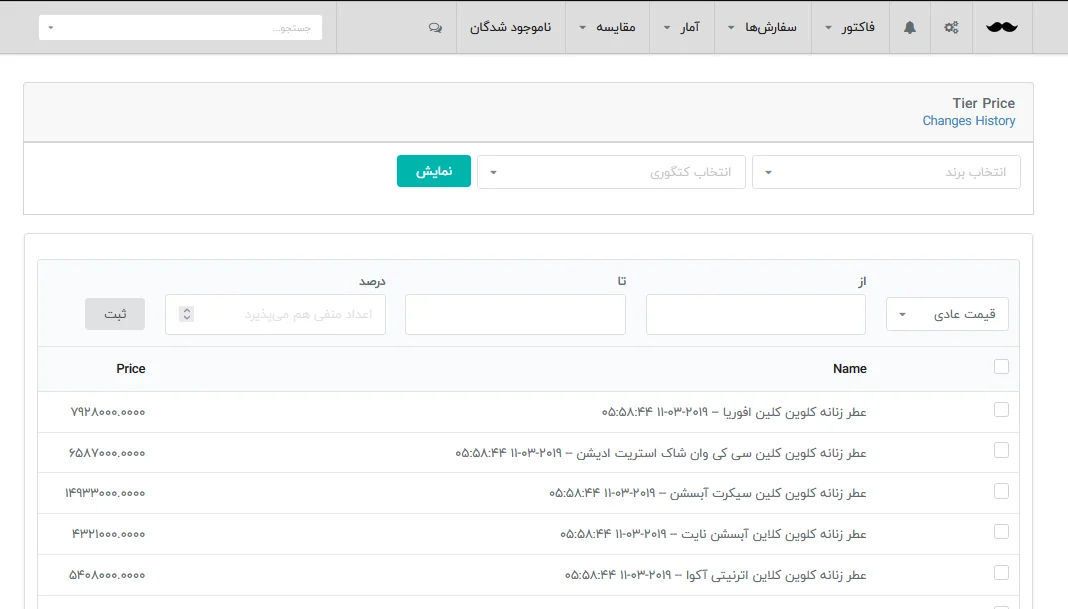
Bulk product and price management. Update by brand, by category or by tier, with a change history, so repricing 18,000 items after a currency move was an afternoon rather than a month.
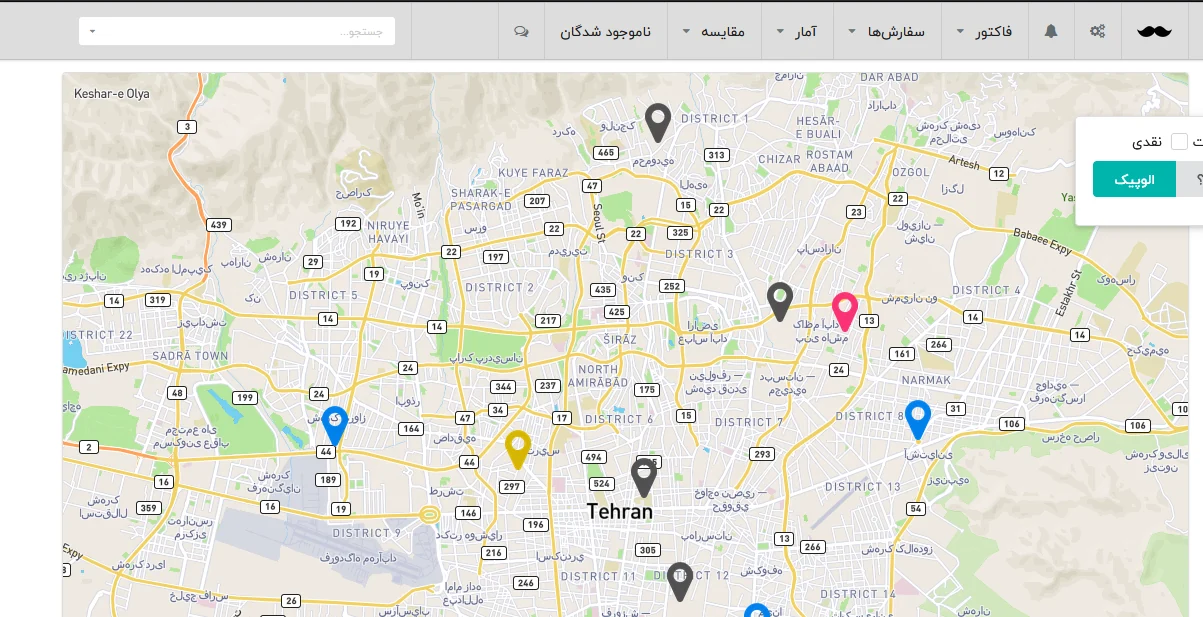
Order operations end to end. Received, processing and in-transit views, each order splittable by item and assignable to a buyer, with dispatch plotted on a map and handed to a courier through an integration.
Automated refunds. Whole order or part of it, returned to the card that paid, with the SMS sent automatically. Nineteen returns against thousands of orders, and none of them handled by hand.
Its own accounting layer. Purchase invoices captured into the system, searchable and editable, reportable by supplier and by date.
Bulk repricing. Filter by brand or category, apply a percentage across the selection, with a change history behind it. Built because a currency move meant repricing the whole catalogue at once.Dispatch. Orders in transit plotted by time and handed to a courier from inside the same screen. No warehouse, so routing was the operation.
Ten years later I built a brokerage a reporting room, a content engine and a nightly fix list on the same instinct: the marketing only compounds if somebody builds the machinery under it. That case study is here →
The call that mattered
The marketplace worked because we solved a matching problem, not a marketing problem. Neither side could reach the other economically, and aggregating fragmented demand into orders an importer would actually fill is what created the margin. The CRM and operations work moved the numbers more than any campaign did. Cutting delivery time 30% raised NPS 60%, and the NPS is what made retention and referral work. Most growth ceilings in a young company are operational problems wearing a marketing costume.
Straight answer
What remains
MissLand wound down in 2021 and the site is gone. What survives is the Instagram audience at @miss.land. I include it because nine years of compounding decisions is the part of my experience a two-year role cannot show.